Welcome
Agenda
Ethical vs Unethical Design
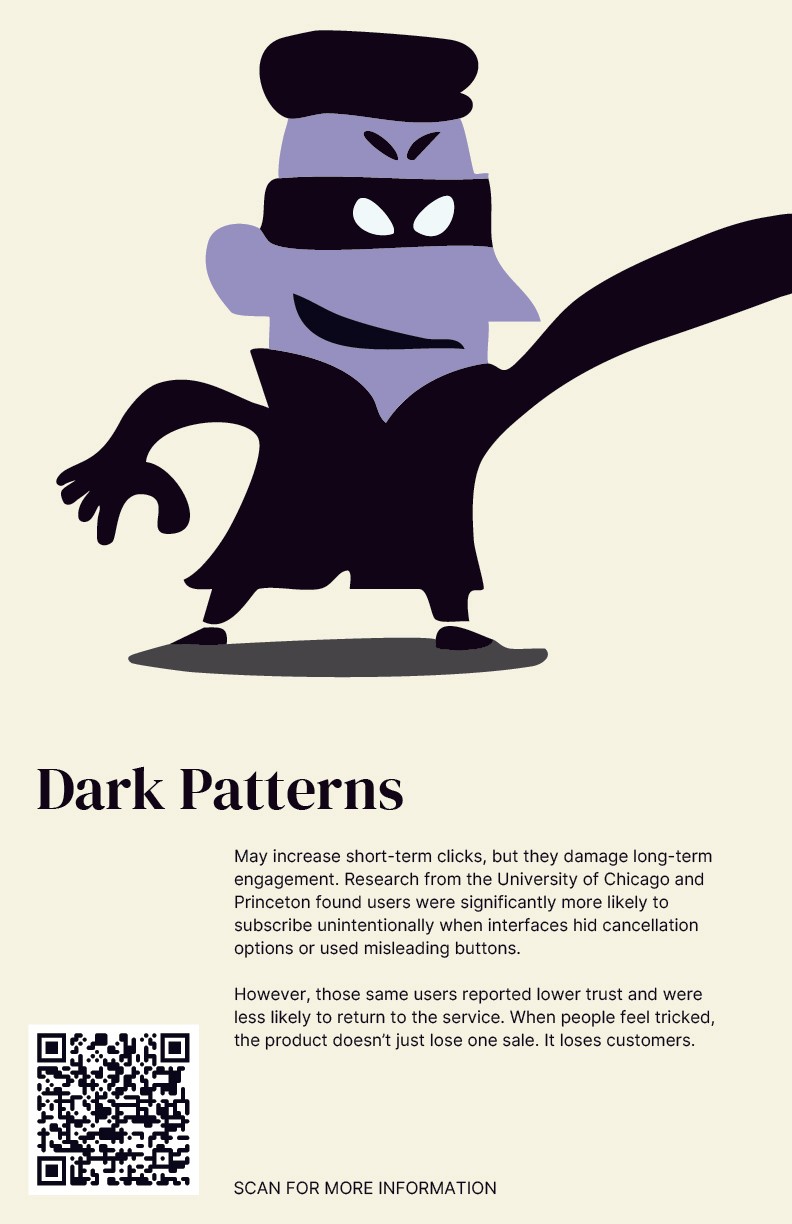
Ethical design is clear and transparent, giving users real control. Unethical design uses dark patterns (hidden fees, confusing wording, hard cancellations) to pressure decisions, hurting trust long-term. Why It Matters Surprise fees cause abandonment, while clear flows improve satisfaction. Easy Cancellation Builds Loyalty Simple cancellation increases trust and long-term loyality
Increasing Sales
Clear Calls-to-Action Simple, honest CTAs reduce confusion and abandonment because users know what will happen next. Simplified forms have been shown to increase sign-ups. UX ROI Strong UX drives revenue — every $1 invested can return up to $100.
Common Sales-Hurting Mistakes
Launching without testing (bugs, crashes) Intrusive pop-ups Poor mobile optimization
Accessibility
ADA-compliant websites follow WCAG 2.1 AA standards so people with disabilities can use them. Key practices: alt text, keyboard navigation, strong color contrast, and clear headings.
Engagement
Micro-interactions Small responses (hover effects, button movement, subtle animation) make interfaces feel responsive and human, increasing engagement and usability.